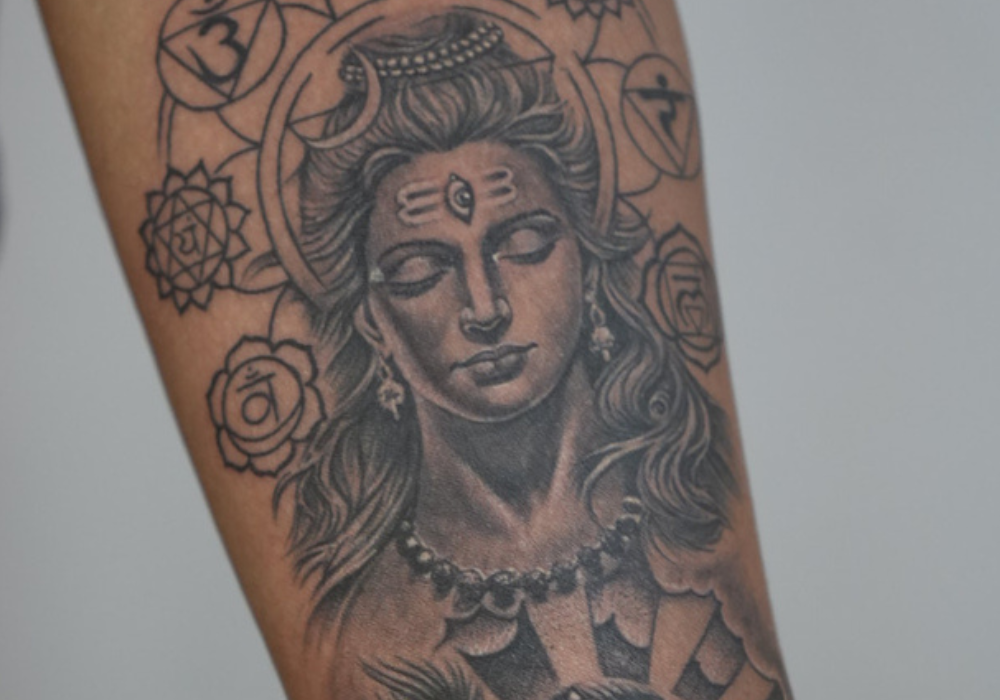
Lord Shiva Tattoo: Meaning, Designs, and Everything You Should Know Before Getting One
What Makes a Lord Shiva Tattoo Different From Any Other Tattoo Most tattoos are decorative. A Shiva tattoo usually isn’t. People who get Mahadev inked aren’t doing it because it looks cool on a mood board. They’re doing it because something in that imagery speaks to them — destruction, rebirth, the untamed side of existence. Shiva is not a gentle deity. He’s the one who burns what needs to burn so something real can emerge. That’s a heavy thing to carry on your skin, and that’s exactly why people want it. This guide covers everything — the meaning behind different Shiva symbols, which design works for which body placement, what style fits the imagery best, what questions to ask your artist, and how to avoid the mistakes that make a great concept end up as a mediocre tattoo. Lord Shiva Tattoo Meaning: Understanding What You’re Actually Getting Before you settle on a design, understand what the symbols mean. Shiva is a complex figure — he holds contradictions together. He’s a yogi and a destroyer. He’s associated with death and also with consciousness. Getting a Shiva tattoo without understanding this is like wearing a word in a language you don’t speak. Here are the core symbols and what they represent: Trishul (Trident) The trishul represents the three fundamental forces — creation, preservation, and destruction. It’s also associated with past, present, and future. As a tattoo, it’s one of the most versatile Shiva symbols — works standalone, works inside a larger portrait, works as a forearm piece or spine tattoo. The trishul is also the most commonly tattooed Shiva symbol in India. Third Eye Shiva’s third eye, located between the eyebrows, represents higher consciousness and the power to see beyond illusion. When it opens, it burns. That’s both a literal concept in the mythology and a metaphor worth sitting with. As a tattoo design, the third eye works brilliantly in portrait work — when an artist nails the intensity around that area, the whole piece comes alive. Damaru (Drum) The damaru is tied to creation — sound as the origin of existence. Shiva’s cosmic dance, the Tandava, happens to the rhythm of the damaru. It’s a less common tattoo choice, but when incorporated into a portrait or scene, it adds serious depth. Crescent Moon The crescent moon on Shiva’s head represents time — specifically the idea that Shiva is beyond it. It’s also linked to Soma, the nectar of immortality. In tattoo designs, the moon adds elegance and contrast, especially in black and grey work. Snake (Vasuki) The serpent around Shiva’s neck isn’t a threat — it’s a symbol of ego subdued. Shiva wears death as an ornament. The snake as a design element wraps beautifully around limb tattoos, and in portrait work, it adds a dramatic visual frame. Vibhuti (Sacred Ash) Three horizontal ash lines on Shiva’s forehead. In tattoo form, these are usually part of a portrait but can also be done as a standalone minimalist piece. Ganga The river Ganga flows from Shiva’s matted hair. This represents Shiva as the one who absorbs what would otherwise destroy — he held the force of Ganga’s descent so the earth wouldn’t be destroyed. In full-scene compositions, this is a striking element to include. Lord Shiva Tattoo Designs: What Works and What Doesn’t There are hundreds of Shiva tattoo variations. Here’s how to think about them by category: 1. Shiva Portrait Tattoo This is the most powerful execution when done well — and the most damaging when done poorly. A Shiva portrait demands an artist with genuine skill in black and grey realism or fine line portraiture. The details that make or break it: the matted locks (jata), the intensity around the eyes, the third eye, and the expression — calm but not passive. Best placement: Upper arm, chest, back, thigh. Style: Black and grey realism, dotwork. Common mistake: Choosing an artist who can’t handle fine facial detail. Always check their existing portrait work before committing. 2. Mahadev Meditating Tattoo Shiva in deep meditation — seated, eyes closed, Himalayas often in the background. This composition is more contemplative than dramatic. It works for people who connect with the yogi aspect of Shiva more than the destroyer aspect. Best placement: Back, chest, calf. Style: Illustrative, dotwork, geometric. 3. Trishul Tattoo (Standalone) Clean, graphic, and immediately recognizable. A trishul tattoo can be done minimally — just the silhouette — or with elaborate detail including flames, serpents, or a damaru at the base. It’s a versatile design that scales well across sizes. Best placement: Forearm, spine, sternum, back of the neck. Style: Fine line, geometric, bold blackwork. 4. Ardhanarishvara Tattoo Half Shiva, half Parvati — the divine masculine and feminine unified. This is a less common choice but deeply meaningful for people who understand the concept. Compositionally, it’s one of the most interesting Shiva designs because it demands balance in the artwork itself. Best placement: Chest, back, ribs. Style: Illustrative, traditional Indian, fine line. 5. Nataraja (Cosmic Dance) Tattoo Shiva as the lord of dance — standing in the ring of fire, performing the Tandava. This is a full-composition design and works best as a large piece. The circular frame, the posture, the fire — when executed with precision, it’s one of the most striking religious tattoos possible. Best placement: Back, chest, upper arm. Style: Geometric, illustrative, linework. 6. Om Namah Shivaya Script Tattoo The mantra as a standalone piece. Can be done in Devanagari or Sanskrit lettering. Works well combined with other Shiva symbols like the trishul or Om symbol. Straightforward in concept, but the quality of the lettering work matters more than most people realize. Best placement: Forearm, collarbone, ribs. Style: Fine line, traditional script. Shiva Tattoo Placement Guide Placement affects everything — visibility, how the design breathes, how it ages, and how it interacts with your body’s natural lines. Design Best Placement Reasoning Portrait Chest, upper arm, back Needs flat, stable canvas for detail Trishul Forearm, spine, sternum Linear design,
Lord Shiva Tattoo: Meaning, Designs, and Everything You Should Know Before Getting One Read More »