A Shiva tattoo is one of the most requested spiritual tattoos in India because the deity carries several distinct meanings — destruction and renewal, meditative stillness, fierce protection, and gentle devotion – so the same figure can represent very different things to different people. Whether it’s called a Mahadev tattoo, a Shankar tattoo, or simply a Bholenath tattoo often comes down to which of these meanings the wearer connects with most.
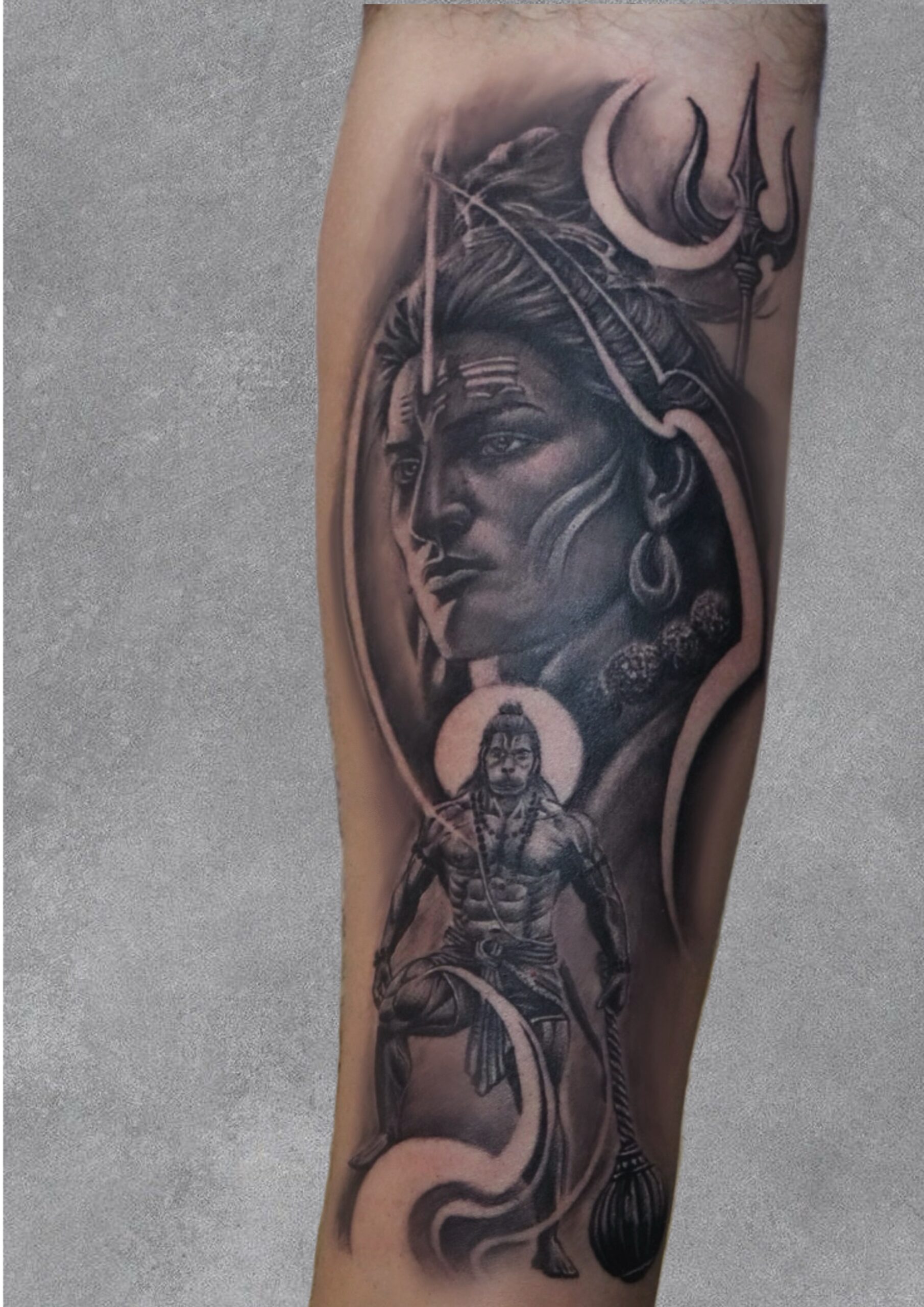
What Does a Shiva Tattoo Mean?
At its core, a Shiva tattoo represents transformation, along with discipline, protection, and devotion, depending on which form of the deity is shown.
Destruction and Renewal
Shiva is known as “the destroyer” within the Hindu trinity, but this destruction is read as necessary and cleansing rather than negative. People going through major life changes often choose this meaning specifically.
Stillness and Discipline
The ascetic, meditating Shiva — seated, eyes closed, unaffected by the world around him — is chosen by people who want a daily reminder to stay grounded and disciplined under pressure.
Bholenath: The Gentle, Forgiving Form
Bholenath means “the innocent-hearted lord.” This version is chosen by people who want the tattoo to feel comforting and approachable rather than intense or fierce.
Mahakal: The Fierce Protector
Mahakal imagery — ash-covered skin, matted hair, the damaru drum — is chosen when the tattoo is meant to function as protection, almost like a personal guardian, rather than a calm meditative symbol.
Popular Shiva Tattoo Designs
The most requested Shiva tattoo styles are the detailed portrait, the meditating Shankar figure, the fierce Mahakal composition, and minimalist symbols like the trishul or Om — each suited to a different size, budget, and level of detail.

Shiva Portrait Tattoo
A close-up rendering of the face, usually including the third eye, the crescent moon, and the serpent around the neck. This is the most visually striking option and the hardest to execute well, since small proportion errors are immediately noticeable.
Shankar Tattoo in Meditation
Shiva shown seated in profile, often with the trishul beside him and Mount Kailash in the background. This style works especially well in black-and-grey shading and tends to age more gracefully than color-heavy designs.
Mahakal Tattoo
A bolder, high-contrast composition built around ash markings, matted hair, and sometimes flames. This design needs more surface area to hold its detail and generally works best as a larger piece.
Minimal Symbols: Trishul, Om, and Rudraksha
For people who want to reference Shiva without a full portrait, the trishul alone, an Om paired with a crescent moon, or a rudraksha bead motif are common choices. These heal faster and cost less sitting time.
Best Placement for a Shiva Tattoo
The forearm is the most common placement for a Shiva tattoo because it offers a long, flat surface and is easy to see during healing, while larger or more detailed designs like Mahakal or full portraits generally suit the shoulder or back better.
Forearm
Best for standing or seated Shiva figures and flute-free portrait work. Easiest to monitor during healing since it’s visible without a mirror.
Upper Arm or Shoulder
Better suited to detailed portrait work. The natural curve adds depth to a meditating figure and leaves room for background elements like the moon.
Back or Shoulder Blade
The best option for large, elaborate compositions — Shiva and Parvati together, a full Nataraja scene, or a detailed Mahakal piece with background elements.
Chest
Chosen less often, and usually for personal rather than decorative reasons — people who want the design private and close rather than visible day to day.
Calf
A practical option for mid-sized designs. Holds fine detail well over time compared to thinner-skinned areas.
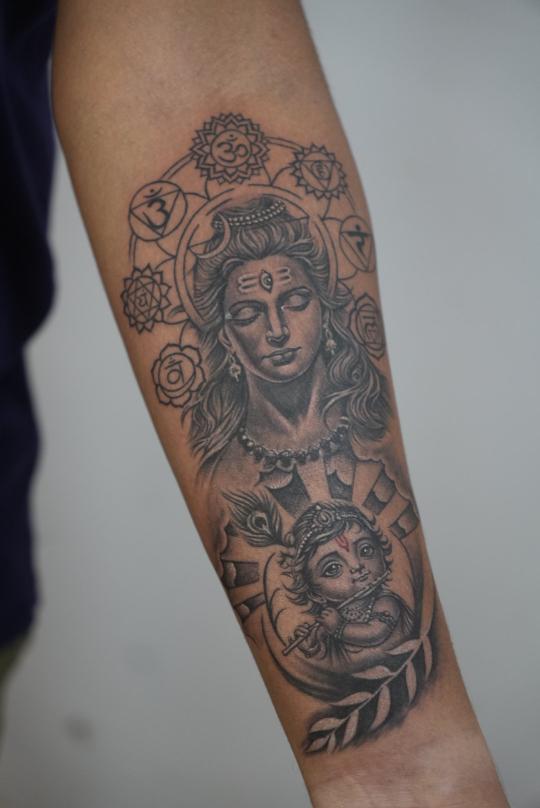
How to Choose a Shiva Tattoo Artist in Mumbai
Look for an artist with healed examples of religious or portrait work, confirmed hygiene practices like sterilized single-use needles, and a willingness to discuss sizing before the appointment day.
Fresh photos taken right after a session don’t tell you how a design ages. Healed work — especially fine linework in a portrait or ash-marking detail in a Mahakal piece — is the better indicator of skill.
If you’re exploring options, a tattoo studio in Mumbai with experience in religious and portrait work is worth a consultation before booking. Screamzonetattoo’s Ghatkopar studio regularly takes on Shiva, Mahadev, and Mahakal pieces and can advise on sizing during a walk-in consult.
Frequently Asked Questions
Is a Shiva tattoo only for religious people?
No. Many people choose it for what it represents more broadly — resilience, discipline, or protection — rather than as a strictly religious statement.
Which Shiva design is best for a first tattoo?
A small trishul, Om symbol, or simplified Bholenath face. These heal quickly and don’t require the long sitting time a full portrait or Mahakal piece needs.
Does a Shiva portrait tattoo fade faster than other designs?
Fine linework — like facial features and thin detail — fades faster than bold outlines and solid shading. Sizing the portrait large enough is the main way to prevent this.
Which placement hurts the least for a Shiva tattoo?
The outer forearm, upper arm, and calf are generally less painful than the chest, ribs, or inner arm, where bone sits closer to the skin.
How big should a Mahakal tattoo be to hold its detail?
Because Mahakal designs rely on ash markings, matted hair, and shading for their effect, they generally need at least upper-arm or shoulder-sized space to read clearly.
Final Thoughts
The right Shiva tattoo depends on which meaning matters most to the wearer — renewal, discipline, protection, or devotion — and getting the placement and artist right is what determines whether the design still holds up years later.
Related: read our guide on Lord Krishna Tattoo Meaning, Design Ideas, and Placement for another spiritual tattoo option.
Pingback: Trishul Tattoo: Meaning, Symbolism & Design Ideas - screamzonetattoo