Lord Krishna Tattoo: Meaning, Design Ideas, Placement & What to Know Before Getting One
A Krishna tattoo is one of the most requested spiritual tattoos in India, and Mumbai is no exception. Beyond its devotional roots, the image of Krishna carries themes of love, wisdom, and playfulness that resonate even with people who aren’t especially religious. This guide covers what a Krishna tattoo actually represents, the design styles people choose most, where to place one, and what to think about before booking a session.
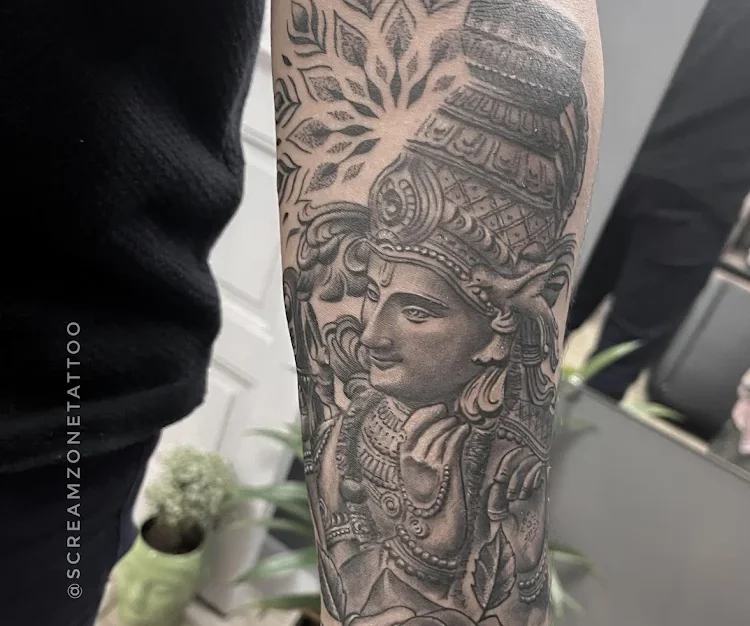
What Does a Krishna Tattoo Represent?
Krishna is one of the most widely worshipped figures in Hindu tradition, and his iconography carries several layers of meaning depending on which part of his story a design draws from. Most people getting inked are drawn to one or more of these ideas:
- Divine love and devotion – Krishna’s relationship with Radha is often read as a symbol of pure, unconditional love, both spiritual and romantic
- Guidance and wisdom – as the charioteer and teacher in the Bhagavad Gita, Krishna represents clarity of purpose and moral guidance during difficult moments
- Playfulness and innocence – the Bal Krishna (child Krishna) imagery reflects joy, mischief, and a lighter, more youthful energy
- Protection – many people choose Krishna tattoos as a personal talisman, believing the imagery offers spiritual protection through hard times
Which meaning resonates depends entirely on the person, which is why the same figure can look completely different from one tattoo to the next depending on the story behind it.
Popular Krishna Tattoo Designs & Styles
Krishna’s iconography is unusually varied for a single deity, which gives a lot of room for personal interpretation. Some of the most commonly requested styles include:
- Bal Krishna (Makhan Chor): the child Krishna caught stealing butter, a favourite for anyone who wants a warmer, more playful design rather than a formal devotional piece
- Venugopal (Krishna with the flute): Krishna playing his flute under a tree, usually paired with soft shading and fine detail
- Radha-Krishna: the pair together, often chosen for its symbolism of love and companionship
- Krishna with the Sudarshan Chakra: a bolder, more powerful composition that leans into his role as protector and warrior
- Peacock feather motif: a minimal, symbolic alternative for people who want to reference Krishna without a full portrait
- Realism portrait: a detailed, shaded rendering of Krishna’s face, usually reserved for larger pieces where an artist has room to work in depth and texture
Each of these carries a slightly different feel — some are devotional, some are decorative, and some sit somewhere in between.
Best Placement Ideas for a Krishna Tattoo
Placement affects more than how visible a tattoo is. It also determines how much detail an artist can realistically fit, how the design ages over time, and how much it will hurt.
- Forearm: the most common choice for Krishna tattoos, since the long, flat surface suits a standing figure or a flute-playing pose well
- Upper arm or shoulder: works well for larger, more detailed portraits, especially realism-style pieces
- Back or shoulder blade: gives the most space for elaborate compositions, such as Krishna paired with Radha or a full scene
- Chest: a more personal placement, often chosen when the tattoo carries private spiritual significance
- Calf: a practical option for medium-sized designs that don’t need a huge canvas, and one that tends to hold detail well over time
There’s no universally “correct” placement — it comes down to the size of the design, how much detail you want preserved, and how visible you want the piece to be day to day.
Cost for Lord krishna tattoo
| Type | Approximate Cost |
| Small minimalist (flute, feather, script) | ₹2,000 – ₹5,000 |
| Medium portrait or single figure | ₹8,000 – ₹25,000 |
| Radha Krishna composition | ₹15,000 – ₹50,000 |
| Large scene (Kurukshetra, Vishwaroopa) | ₹40,000 – ₹1,50,000+ |
| Full back piece | ₹80,000 – ₹2,00,000+ |
Placement Guide for Krishna Tattoos
| Design | Best Placement | Notes |
| Krishna portrait | Chest, upper arm, back | Needs flat stable surface for facial detail |
| Radha Krishna | Back, chest, upper arm | Composition works best with space |
| Bal Krishna | Upper arm, calf, back | Medium scale works well |
| Tribhanga pose | Upper arm, calf | Vertical composition suits limb placement |
| Kurukshetra scene | Full back, thigh | Large format only |
| Vishwaroopa | Full back | Maximum canvas needed |
| Flute / feather | Wrist, forearm, collarbone | Scales well at small size |
| Script / mantra | Forearm, ribs, collarbone | Flat placement for legibility |
Choosing a Krishna Tattoo Studio in Mumbai
A Krishna tattoo, like any religious or fine-detail piece, depends heavily on the artist’s steady hand and understanding of shading and proportion — small errors in a face or in the flute’s angle are much more noticeable than in an abstract design. A few things worth checking before booking:
- Ask to see healed examples of religious or portrait work specifically, not just fresh photos taken right after a session
- Confirm the studio follows visible hygiene practices — sterilised equipment and single-use needles should be a given, not something you have to ask twice about
- Talk through placement and sizing with the artist beforehand rather than deciding on the day, especially for detailed pieces that need enough space to hold up over the years
If you’re in the city and looking for a reliable tattoo studio in Mumbai for a Krishna piece, it’s worth checking an artist’s past religious and portrait work directly rather than going off a single photo. Studios based in areas like Ghatkopar, including Screamzonetattoo’s Ghatkopar studio, regularly work on spiritual pieces like this and can walk you through design options during a consultation.
Frequently Asked Questions
Q: Is a Krishna tattoo only appropriate for religious people? A: Not necessarily. While Krishna is a central figure in Hindu tradition, many people choose the design for what it represents more broadly – love, guidance, or joy rather than as a strictly religious statement.
Q: Which Krishna design is best for a first tattoo? A: A smaller Bal Krishna or peacock feather motif tends to be a good starting point. Both heal relatively quickly and don’t require the extended sitting time that a large realism portrait would.
Q: How much detail does a Krishna portrait tattoo actually need? A: It depends on the size. A small piece works better as a simpler outline or symbolic reference, while a larger placement like the shoulder or back can support the shading and fine linework a realistic portrait needs to hold up over time.
Q: How do I know if a design will age well? A: Fine details like facial features and thin linework fade faster than bold outlines and solid shading. If you want a portrait-style Krishna tattoo, ask your artist about sizing it large enough that the detail doesn’t blur together as it heals and settles over the years.
Conlusion
A Krishna tattoo is a design that can mean very different things depending on which part of the story you connect with – love, guidance, protection, or simple joy. Taking the time to choose the right style and placement makes a real difference in how the piece looks years down the line, not just on day one.
If you’re exploring ideas, browsing a studio’s existing portfolio is a good next step before booking a consultation.
Related: read our guide on Trishul Tattoo Meaning, Symbolism & Design Ideas for another take on spiritual tattoo symbolism.